
Why Volatility Is Your Friend (If You're Doing This One Thing)
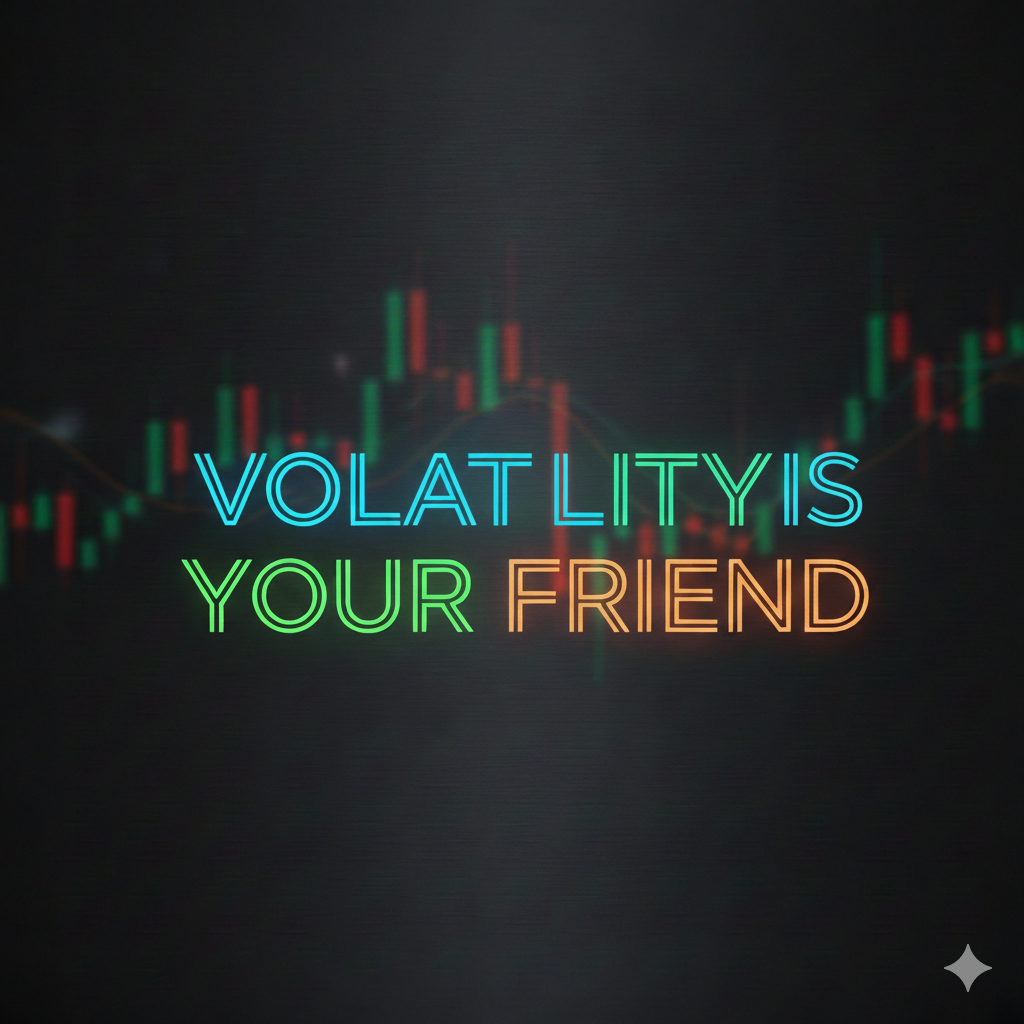
Market drops scare people into doing nothing. That's backwards.
If you're investing a fixed amount on a regular schedule—every paycheck, every month, whatever works—volatility isn't your enemy. It's doing you a favor.
This is dollar-cost averaging. It's not sexy. It works.
How It Works
You invest $500 every month. When the market's up, that $500 buys fewer shares. When the market's down, it buys more.
You're not trying to time anything. You're just showing up consistently.
When prices drop, your fixed investment buys more shares. When prices rise, it buys fewer. You're automatically buying low and buying less high—without predicting anything.
Over time, your average cost per share naturally drops during downturns and stabilizes during upswings. That's the whole trick. Remove the decision. Just keep buying.
Why Timing Doesn't Work
Everyone thinks they can spot the bottom. Almost no one can.
Studies on this go back decades. Professional fund managers, with teams of analysts and real-time data, fail to time markets consistently. You're not going to do better staring at your phone.
The investors who build wealth aren't the ones who bought at the perfect moment. They're the ones who kept buying through the imperfect ones.
What to Buy
Dollar-cost averaging works best with companies you'd want to own for years. Dividend growers are ideal because they pay you while you wait.
Dividend Kings (50+ years of consecutive increases) and Aristocrats (25+ years) have survived recessions, wars, and every panic in between. They're not immune to drops—but they keep paying, and they keep raising.
Five examples that pass my filters:
- PepsiCo (PEP) – 52 consecutive years of increases
- Procter & Gamble (PG) – 69 years
- Coca-Cola (KO) – 63 years
- Walmart (WMT) – 52 years
- McDonald's (MCD) – 49 years
These aren't exciting. They're reliable. That's the point.
The Ex-Dividend "Drop" Isn't a Loss
New investors sometimes panic when a stock drops on its ex-dividend date. Don't.
The price drops by roughly the dividend amount because that cash is leaving the company and going to you. It's a transfer, not a loss. Your total value (shares + cash) stays the same.
If you're reinvesting dividends, you're buying more shares at that slightly lower price. Volatility working for you again.
What This Looks Like Over Time
Say you invest $500/month into a dividend grower yielding 2.5% with 6% annual dividend growth.
Year one: not much happens. You're just accumulating.
Year five: your dividends are noticeably higher than when you started, and you own more shares than you would have buying all at once.
Year ten: the compounding is visible. Your yield on original cost is now 4%+, and you've accumulated shares through multiple dips that looked scary at the time.
Year twenty: you barely remember the drops. You just see the growth.
The Only Rule
Don't stop.
The strategy only works if you keep going when it feels wrong. When prices drop 20% and headlines are screaming. When your balance is lower than last month even though you added money.
That's when it's working hardest. That's when your fixed investment is buying the most shares.
Stopping during downturns is the one mistake that breaks the whole system.
Bottom Line
You can't control the market. You can control your behavior.
Dollar-cost averaging is a bet on your own discipline, not your ability to predict anything. Pair it with companies that have decades of proof behind them, and volatility becomes an advantage instead of a threat.
Show up. Keep buying. Let time do the rest.
This is educational content, not investment advice. Do your own research before making investment decisions.


Member discussion