
Down 40% Still Isn’t “Cheap”
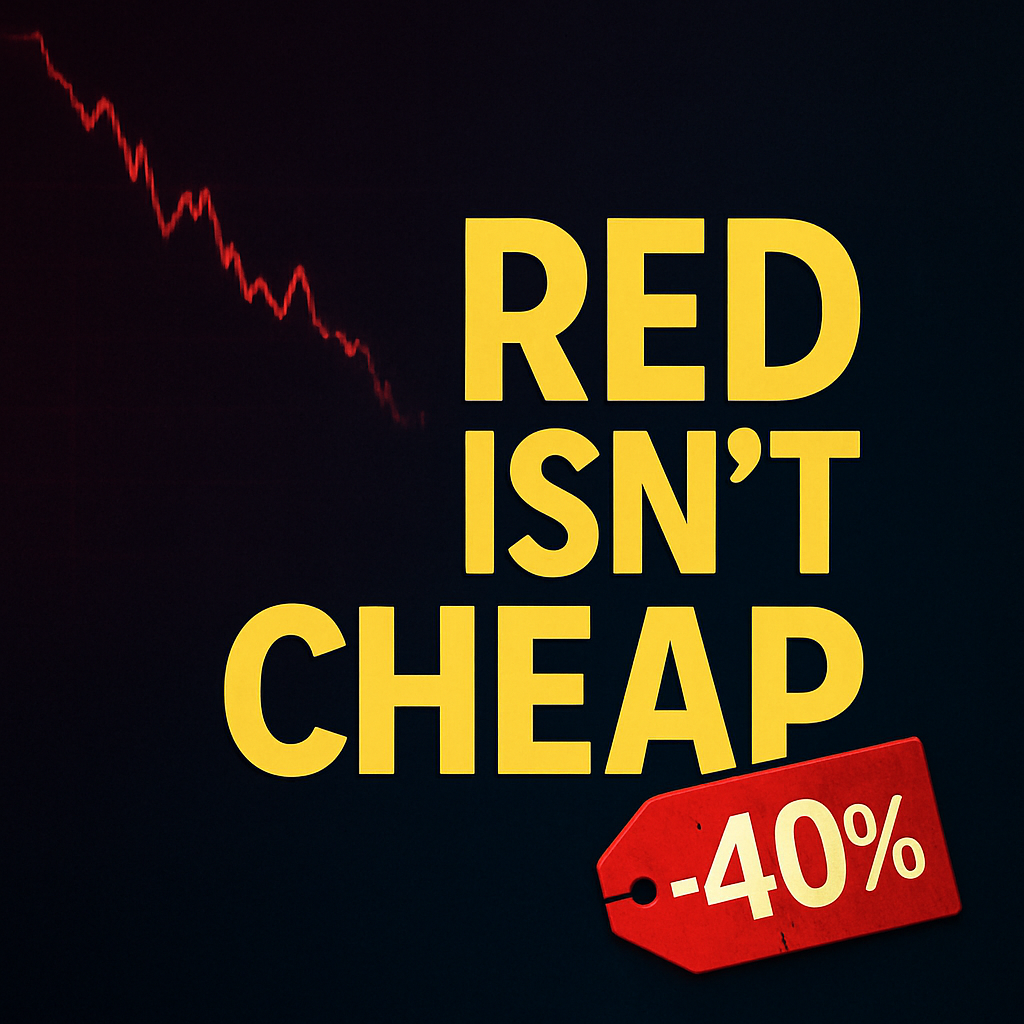
The Red Chart Trap
Everyone loves a red chart until they own it.
Lower Isn't the Same as Cheap
A stock that’s down 40% isn’t automatically a bargain. It’s just lower. The only real question is simple: at this price, what business are you actually buying, not what it used to trade at.
Start With the Business, Not the Drawdown
Most people start with the drawdown. That’s backwards. Start with the business.
Pull the last few years and look at the arc. Are revenue and free cash flow climbing, or are they stalling while management keeps talking about “transition,” “macro headwinds,” and every other excuse on the bingo card? Are margins roughly holding or bleeding out quarter after quarter? Is the share count flat or shrinking, or are they quietly printing stock to keep the lights on?
Value or Just Gravity?
If the business is clearly getting better while the stock gets cheaper, that’s interesting. If the business is decaying and the stock is just following it down, that isn’t value. That’s gravity.
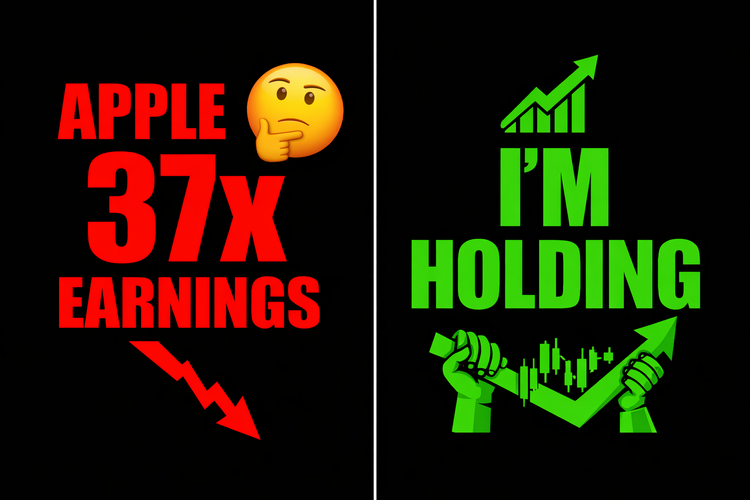
Then ask what actually changed. Sometimes the market simply wakes up and realizes it was paying a fantasy multiple. The underlying machine still works; investors just stop pretending it deserves 40× earnings. Painful, but mostly about sentiment.
Other times, the machine itself is breaking. Growth is slowing, competitors are eating their lunch, costs are sticky, and management keeps “resetting expectations” every quarter. One guide-down can be caution. Two or three in a row is a confession: they never understood their own runway in the first place.
That’s where people get trapped. They anchor on the old high and tell themselves they’re “buying the dip,” when really they’re buying a worse business at yesterday’s logic.
A 40% drawdown doesn’t make a stock cheap. It just means the story finally met the numbers.
Test the 'Just Fine' Scenario
Valuation is where this either makes sense or doesn’t. Forget heroic scenarios. Take today’s cash generation and assume things just go “fine”: modest growth, no miracle turnaround, no magical multiple expansion. If the current price gives you a reasonable return on that middle-of-the-road future, maybe there’s a case.
If the whole pitch only works if growth snaps back, margins expand, the cycle turns, and the market decides to slap a premium multiple on top again… that isn’t a margin of safety. That’s a wish list.
Most "Bargins" Never Come Back
History is full of names that looked “cheap” after a big drop and never came back. The old high becomes a ghost, not a magnet. The dot-com graveyard is packed with investors who averaged down into “bargains” that went from down 60% to zero.
Boring Discipline Beats Red Ink
The discipline is boring and it stays the same: respect the cash flow, respect the balance sheet, respect the direction of the fundamentals. If the business is strengthening while the stock is weakening, you might have an opportunity. If the business is weakening and you’re leaning on the prior peak for comfort, you’re not investing. You’re clinging to history.
Red ink isn’t a discount sign. Sometimes it’s just the label on something you should leave on the shelf.



Member discussion